
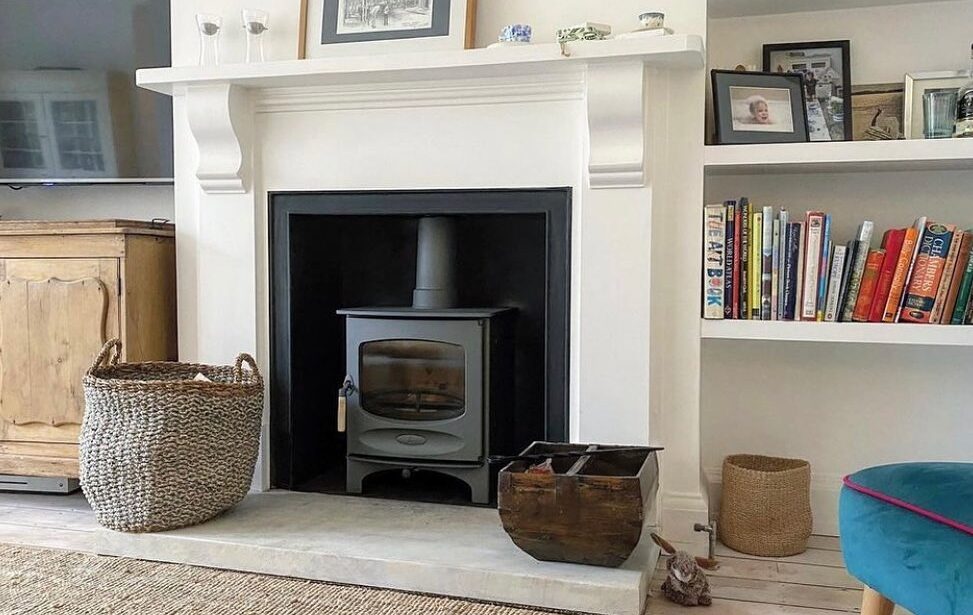
Transform your home with warmth, style & efficiency
Nothing adds comfort and atmosphere like a real fire. At Eddie’s Fireplace, we specialise in the professional installation of wood-burning and multi-fuel stoves across London and surrounding areas. Whether you’re upgrading an existing fireplace or creating a new focal point, our certified engineers ensure a safe, efficient and beautiful result.
- HETAS-certified installers — all work fully compliant with UK building regulations.
- Tailored advice — we help you choose the right stove size, design and fuel type for your space.
- End-to-end service — from survey and flue inspection to final sign-off and user demonstration.
- Minimal disruption — clean, careful installation with full respect for your home.
- Experience you can trust — decades of combined expertise installing in period homes, new builds and apartments across Greater London.
With many years’ experience working across London homes, we understand the nuances of installing stoves in different property types — from period homes to contemporary apartments. Our commitment to safety, cleanliness and finishing detail means the installation looks great and performs reliably.
Service Areas
We proudly serve homeowners, architects and developers across London, Surrey, Kent, Hertfordshire and Essex.
Typical projects include:
Victorian & Edwardian terraces
Modern apartments & loft conversions
Country cottages & barn conversions
New builds with no existing chimney (twin-wall systems)
FAQs
Do I need a restrictor or liner when installing a new stove?
Often yes. Many chimney flues need inspection or relining to provide correct draft, prevent smoke escape, and meet safety standards. If your chimney is outdated, damaged or incorrectly sized you’ll likely need a flexible steel liner or twin-wall system.
It depends on the appliance and your local area. In smoke-control zones, you must use a stove that is either DEFRA-approved or burn authorised fuels. Also, logs should be well-seasoned (“Ready to Burn”, moisture < 20%).
For wood- or multi-fuel stoves: at least once a year for smokeless fuels, and twice a year if burning wood heavily. Also inspect for debris, drafts, or degradation that could affect safety or performance.